
OEM & White Label
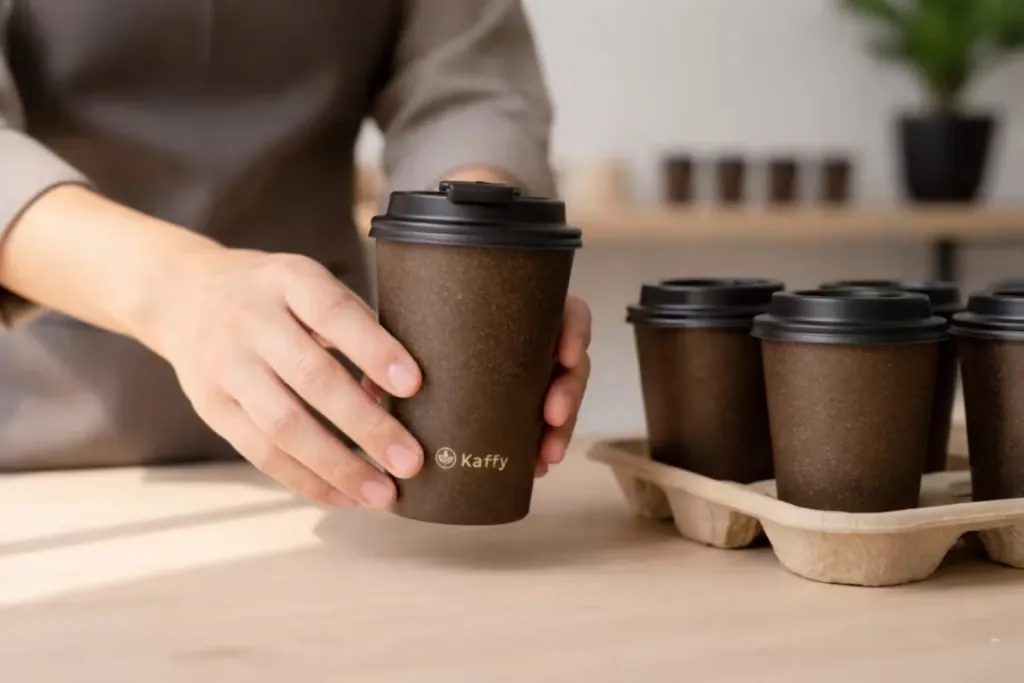
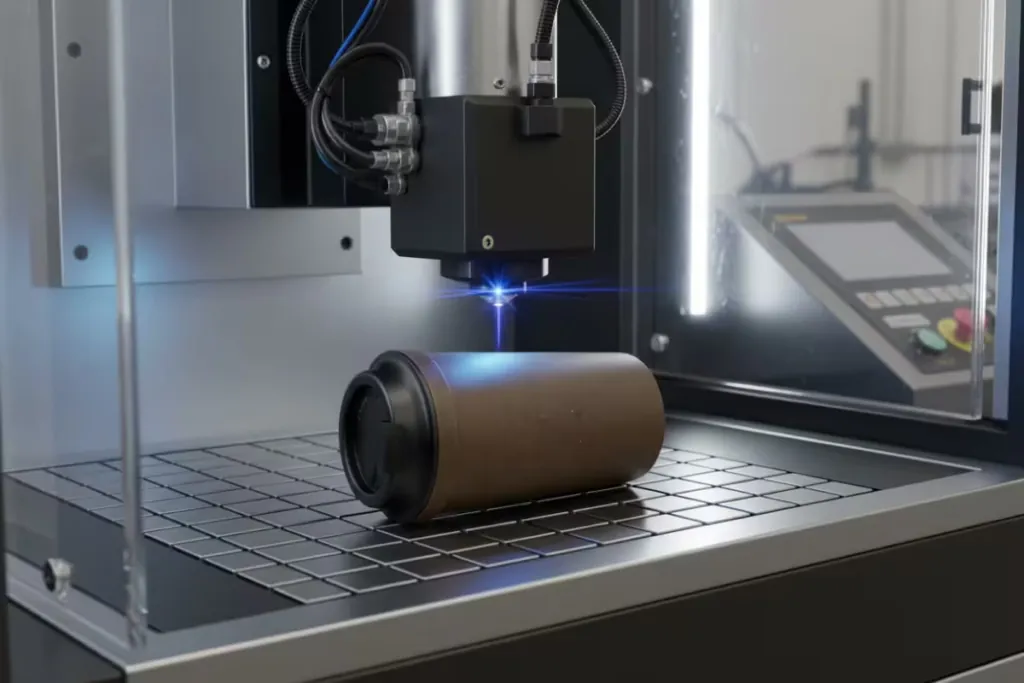
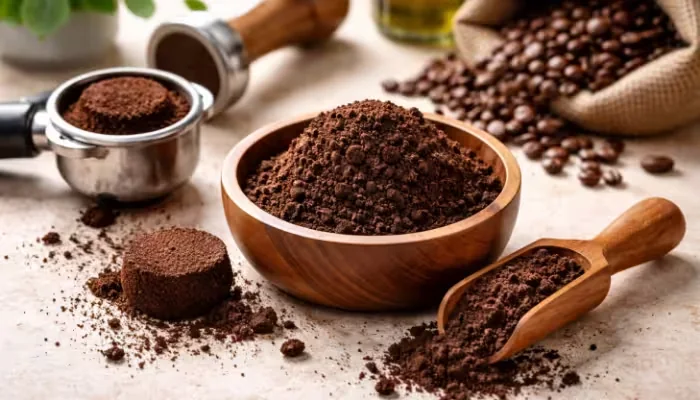
White label coffee ground products are finished goods — pressed from upcycled spent coffee grounds — that carry your brand instead of the maker's. Kaffy is the OEM behind them: we press, engrave and pack in our own Malaysian factory while you sell them as your own line. It sits inside our wider coffee-grounds partnership programme.
Last updated: 27 July 2026

More Malaysian brands want a sustainable product to call their own — not a generic import with someone else's logo hidden on the base. The problem is that building one from scratch means tooling, material sourcing, a factory line and a waste story you can actually stand behind. Kaffy removes all of that. We already take spent coffee grounds that cafés and offices throw away, press them into desk pieces, drinkware and gifts, and brand them on our own factory floor. As the OEM partner, we simply put your brand on that line instead of ours.
This page explains what white-label coffee-ground products are, how OEM pricing scales with volume, the minimum orders and lead times per product type, whether private-label demand is rising, and why an own-factory, halal-safe, upcycled supply chain matters when your name is on the product. First, a short look at how spent coffee grounds become a finished product.
White label means Kaffy's upcycled coffee-ground products are sold under your brand, not ours. OEM means we are the maker behind them — pressing, engraving and packing to your spec in our own factory. You own the brand and the customer; we own the production. For selling our brand as-is, see the eco gifts reseller program instead.
People use "white label" and "OEM" loosely, so it helps to be clear about what Kaffy actually offers. Both describe the same factory doing the making, with the difference sitting in how much of the product is yours:
That distinction matters because it changes MOQ, tooling and lead time. White label runs off proven products, so it moves fast and cheap; OEM needs design and sampling first, so it costs more and takes longer but gives you something no competitor can copy off a shelf. Many brands start white label to test the market, then move to OEM once the line sells. Both plug into the same coffee-grounds partnership supply chain.
White label puts your brand on Kaffy's proven products fast; OEM presses your own design from scratch. Same factory, same upcycled material — you choose how much of the product is uniquely yours.
White-label OEM gives you brand ownership and product control that reselling and off-shelf buying do not — at the cost of a higher minimum order. The comparison below sets white-label OEM against the reseller route and one-off off-shelf buying across branding, MOQ, margin and control, so you can see which model fits your goal. It complements our reseller program.
The right model follows your goal. If you want a sustainable product line to own and price yourself, white-label OEM is the fit — you accept a higher minimum in exchange for the brand and the margin. If you serve varied clients and want low commitment, reselling is easier. Off-shelf buying suits one-off needs. Brands that outgrow reselling often graduate to white label once volume justifies the minimum.
White-Label OEM vs Reseller vs Off-Shelf Buying (Illustrative Comparison)
| Factor | White-label OEM | Reseller | Off-shelf buyer |
|---|---|---|---|
| Branding | Your brand on the product itself | Kaffy brand, your client relationship | Client logo per order |
| Minimum order | Higher (from ~500 units) | Low (from ~50 units) | Per-order, small runs |
| Margin potential | Highest — you set retail price | Tiered reseller margin | Lowest — standard rate |
| Product control | Shape, colour, spec to your design | Kaffy range, your logo | Catalogue as-is |
| Lead time | Longer (design + sampling) | Standard production | Shortest |
Illustrative comparison compiled by Kaffy from partner-onboarding practice, 2026. Directional, for planning; exact terms confirmed per order.
White-label OEM trades a higher minimum order for full brand ownership, product control and the best margin — the model to choose when you want a private sustainable line, not just something to resell.
White-label unit cost falls as order volume rises, because setup and branding costs spread across more units. The chart below shows an illustrative index of white-label unit price by order volume tier, the starting point for pricing a private line you can profit from. Confirm your exact rate through the quote form.
The curve is steepest at the start. Moving from a first run of a few hundred units up into the low thousands is where unit cost drops fastest, because the fixed cost of branding setup and colour matching is shared across far more pieces. Beyond that, savings continue but flatten. For a brand planning its first private line, the practical read is simple: order enough in the first run to clear the steep part of the curve, and the per-unit economics start working in your favour.
Illustrative White-Label Unit Price Index by Order Volume Tier (2026)
Illustrative price index modeled on Kaffy white-label costing estimates, 2026. Indexed to the smallest tier at 100; directional only, actual per-unit pricing quoted per product and customisation.
White-label unit cost drops fastest between the first few hundred units and the low thousands — sizing your first run past that steep part of the curve is where private-label economics start to pay.
White-label OEM
Minimum orders and lead times vary by how complex the product is — simple desk pieces start lower and ship faster than custom OEM shapes. The table below shows illustrative white-label MOQ and lead time by product category, so you can plan a launch timeline. Simpler pieces also appear in our branded coffee-ground catalogue.
The pattern is worth planning around. Simple pressed pieces such as coasters and trays carry the lowest minimums and the shortest lead times because they run off proven moulds and only need your branding added. Drinkware and boxed sets take a little longer for assembly and packing. A fully custom OEM shape needs a new mould and sampling round, which is why both its minimum and its timeline sit highest. Build launch dates back from these windows and add a buffer for artwork sign-off.
Illustrative White-Label MOQ and Lead Time by Product Category (2026)
Product category · Indicative MOQ (units) · Indicative lead time
Illustrative MOQ and lead-time ranges modeled on Kaffy white-label production estimates, 2026. Directional; exact figures confirmed per product, artwork and customisation at quote.
Simple white-label desk pieces start from around 500 units and roughly six weeks; custom OEM moulds need higher minimums and 10–12 weeks — plan launch dates back from the category you choose.
Yes. As brands seek a sustainable product to own rather than resell, more enquiries ask for white-label or OEM rather than off-shelf buying. The trend below shows the illustrative rise in the share of Kaffy enquiries asking for a white-label or OEM arrangement, tracking the shift toward owned green lines.
The driver is ownership. A brand that resells someone else's product can be undercut the moment a competitor sources the same line, so the sharper play is to own a sustainable product outright — one that carries your name, your design and a waste story rivals cannot copy. That is what the trend captures: sustainability moving from a box brands tick with a bought-in gift to a line they build into their own catalogue. An upcycled coffee-ground product, made under your brand, is a direct way to do that.
Share of Kaffy Enquiries Asking for White-Label / OEM (Illustrative Trend)
Illustrative trend modeled on Kaffy enquiry-mix estimates, 2023–2026. Directional, not audited market share.
Brands increasingly want to own a sustainable product, not just resell one — white-label OEM is the fastest route to a private eco line built on a waste story competitors can't copy.
Put your brand on upcycled coffee-ground products made in our factory.
Because when your brand is on the product, the supply behind it has to be trustworthy — upcycled from real coffee grounds, halal-safe by policy, and pressed in Kaffy's own Malaysian factory. That gives your private line a real story and reliable quality. Kaffy is the B2B arm of PNH Malaysia Sdn Bhd.
Putting your name on a product raises the stakes: a quality slip or a hollow green claim lands on your brand, not the supplier's. Kaffy is built so an OEM partner can stand behind the line with confidence:
If your brand also needs a signature finish, the same factory adds bespoke custom logo laser engraving, and larger programmes can draw on our bulk and wholesale terms. Either way, your private line traces to one Malaysian maker you can name — not an anonymous import.
OEM with Kaffy gives your brand a real upcycled story, a halal-safe fit for the Malaysian market, and own-factory quality control — the trust a product needs when it carries your name.
Four stages: brief and quote, sample and sign-off, production, then delivery. Share your product idea, branding and expected volume through the request-a-quote form, and Kaffy takes it from spec to a finished private-label run.
Here is the path from first brief to a branded product on your shelf:
One brief starts the process — and because production and branding sit in one factory, you go from spec to a finished private-label product, with artwork and moulds kept on file so reorders move faster.
A white-label or OEM line only works when the product is genuinely good and the story behind it is real. That is what Kaffy offers a Malaysian brand: upcycled coffee-ground products pressed, engraved and packed under your brand in our own factory, with MOQs from as low as 500 units, clear lead times, and a halal-safe, ESG-ready origin your buyers can report. You own the brand and the margin; we handle the making.
This is one part of the wider Kaffy offer. When you're ready, explore the Kaffy corporate hub, look at the lower-commitment reseller program, or browse the full branded coffee-ground catalogue to see what your private line could start from.
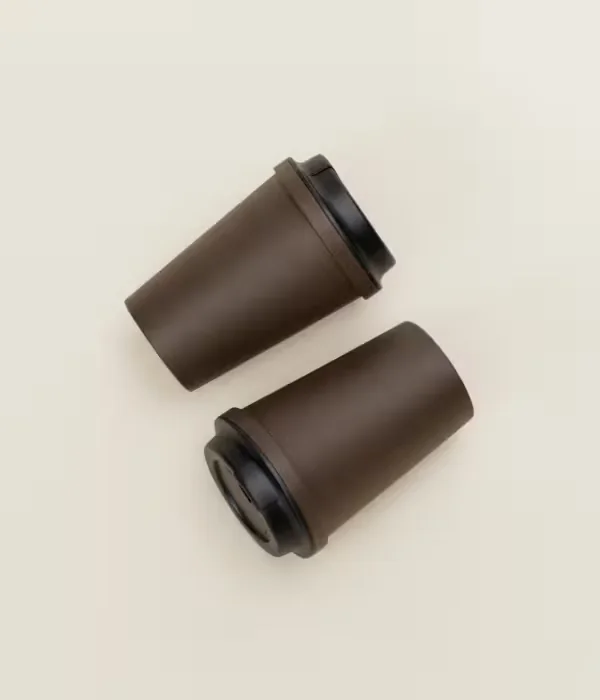
From Waste to Product – Turning Coffee Grounds Into Something Reusable
Source video: How A Company Is Turning Coffee Grounds Into Reusable Cups on YouTube
Send us your product idea, branding and expected volume — we'll recommend white label or OEM, map you to a unit price, and take it from spec to a finished private-label run made in our own Malaysian factory.