
Furniture

Sustainable Office Furniture Malaysia

Sustainable office furniture is furniture a company can defend on environmental grounds — traceable material, a short supply chain and documentation a reviewer can file. Kaffy makes it as a maker, not a trader: desk pieces and surface panels pressed from spent coffee grounds and engraved in-house, so every item carries a real waste-diverted story. It pairs naturally with the wider Kaffy corporate range.
Last updated: 25 July 2026

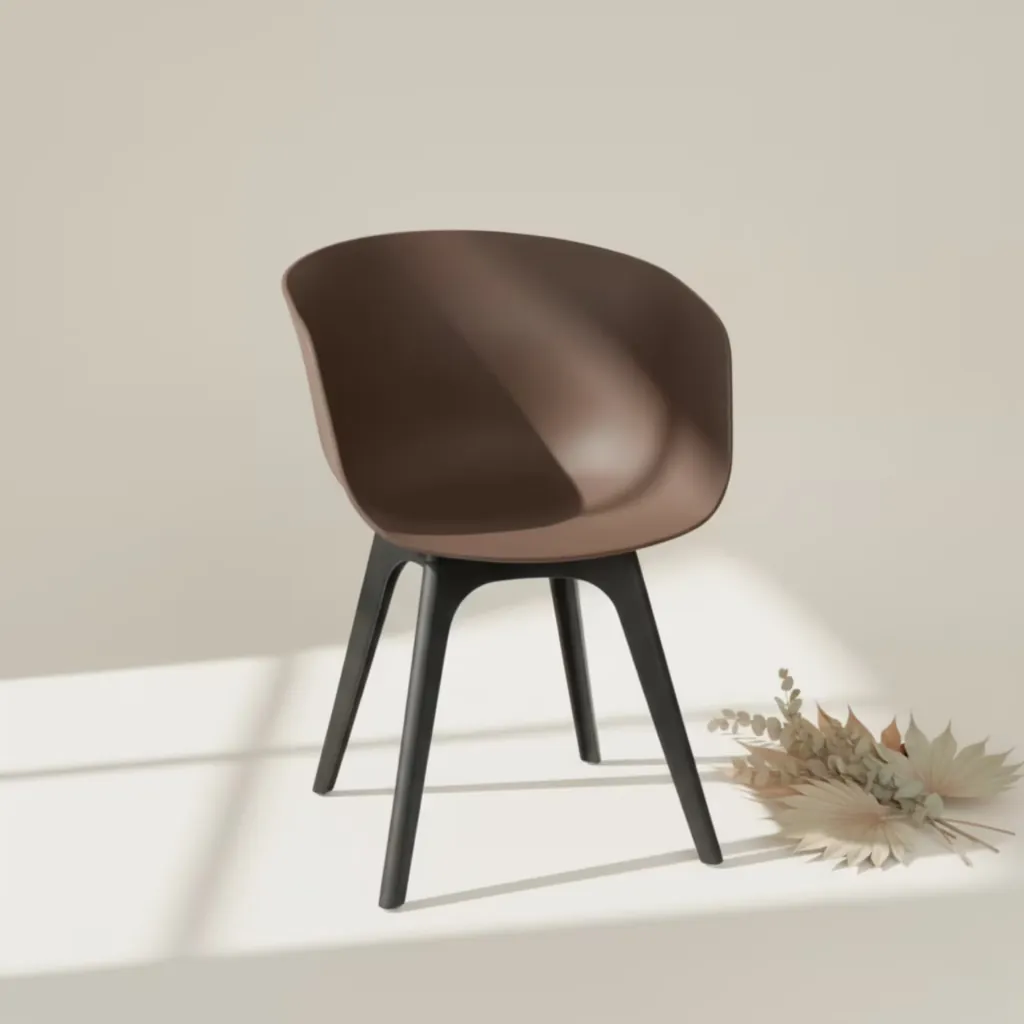
Kaffy moulded coffee-ground chair on a pale backdrop

Most "eco" office furniture sold in Malaysia is an imported blank with a green label. A trader buys recycled-plastic or bamboo stock from overseas, marks it up, and leaves the sustainability claim vague. On paper it looks responsible; under a procurement or ESG review it falls apart, because the import trail and the unproven material claim are exactly what an auditor questions. Kaffy works the other way round. We collect spent coffee grounds locally, press them into desk and surface pieces, and brand them on the same factory floor — so the sustainability story is something we can document, not something we bought.

This page covers what makes office furniture genuinely sustainable, which factors Malaysian fit-out buyers weight most, how coffee-ground pieces compare with conventional furniture, what each item diverts, and how the halal-safe, own-factory process keeps procurement clean. First, a short look at the in-house engraving behind every piece.

What makes office furniture genuinely sustainable?

Quick answer

Genuinely sustainable office furniture is traceable, locally made and documented — it diverts real waste, avoids a long import trail, and comes with paperwork a reviewer can file. Coffee-ground desk and surface pieces cover all three, which is why they anchor Kaffy's move from gifting into coffee grounds collection and larger fit-out work.

"Sustainable" on a piece of furniture means nothing until it survives a procurement or ESG review. The difference between real sustainable office furniture and a greenwashed version comes down to four things:

Miss any one of these and the furniture becomes a liability rather than a proof point. A bamboo desk tidy flown in from overseas fails the supply-chain test; an unlabelled "eco" panel fails the documentation test. A coffee-ground piece made and branded locally is built to pass all four at once.

  • Traceable material, not a vague claim. "Made from recycled content" is unverifiable. "Pressed from spent coffee grounds collected in Malaysia" is a specific, documentable origin.
  • Local supply chain. Furniture made in Malaysia has no long import trail to explain in a sustainability review — the shorter the chain, the fewer the questions.
  • Socially inclusive. Halal-safe by policy and free of culture-locked imagery, so one piece is fair across a Malay, Chinese and Indian workforce — the social pillar, not just the environmental one.
  • Documented for reporting. An itemised invoice, delivery order and per-order impact summary let the purchase appear as a clean line in a CSR or ESG file.
Key takeaway

Furniture only counts as sustainable when it is traceable, locally made, inclusive and documented — a coffee-ground piece is designed to clear all four tests, where imported "eco" stock usually fails at least one.

Which sustainability factors do Malaysian office buyers weight most?

Quick answer

Waste diversion and local sourcing top the list, followed by inclusive suitability, documented impact and product durability. The chart below shows the share of Malaysian office fit-out buyers who rate each sustainability factor "important" when choosing furniture, based on Kaffy's 2026 buyer guidance.

The pattern is clear: buyers lead with the environmental pillar but no longer stop there. Waste diversion and local sourcing sit at the top because they are the two claims easiest to challenge and easiest to prove. Documentation and durability follow closely, because furniture that cannot be evidenced — or that falls apart in two years — creates both governance and cost risk. A coffee-ground piece scores across all five at once, which is why it clears a sustainability-led brief with less back-and-forth than an imported alternative.

Sustainability Factors Malaysian Office Buyers Rate "Important" (Illustrative, 2026)

Sustainability factorShare rating it importantShare
Waste diversion / upcycled material
80%
Local sourcing (made in Malaysia)
69%
Documented impact for reporting
66%
Durability / long product life
61%
Halal-safe / inclusive for all staff
57%

Source: Kaffy office furniture buyer guidance, 2026. Illustrative shares reflect the factors most often raised in sustainability-led fit-out briefs; directional, not audited market research.

Key takeaway

Waste diversion and local sourcing lead furniture decisions in Malaysia, with documentation and durability close behind — pick pieces that answer all four and the review moves fast.

How do coffee-ground pieces compare with conventional office furniture?

Quick answer

On the factors a sustainability review checks — material origin, waste diverted and import trail — a coffee-ground piece outperforms imported plastic, particleboard and bamboo furniture. The comparison below sets Kaffy's coffee-ground furniture against three common alternatives across the criteria that decide a green fit-out sign-off, the same logic behind our ESG corporate gifts.

The gap is not about which piece looks nicer — it is about what an auditor can verify. Bamboo is renewable, but if it flew in from overseas the import trail cancels much of the benefit and there is no waste-diverted figure to report. Particleboard usually carries resins and an unclear origin. The coffee-ground piece is the only one of the four that turns a waste stream into the product itself, with no import trail and a number you can cite. Companies extending the same material logic often pair furniture with matching desk gifts from the wider Kaffy corporate range.
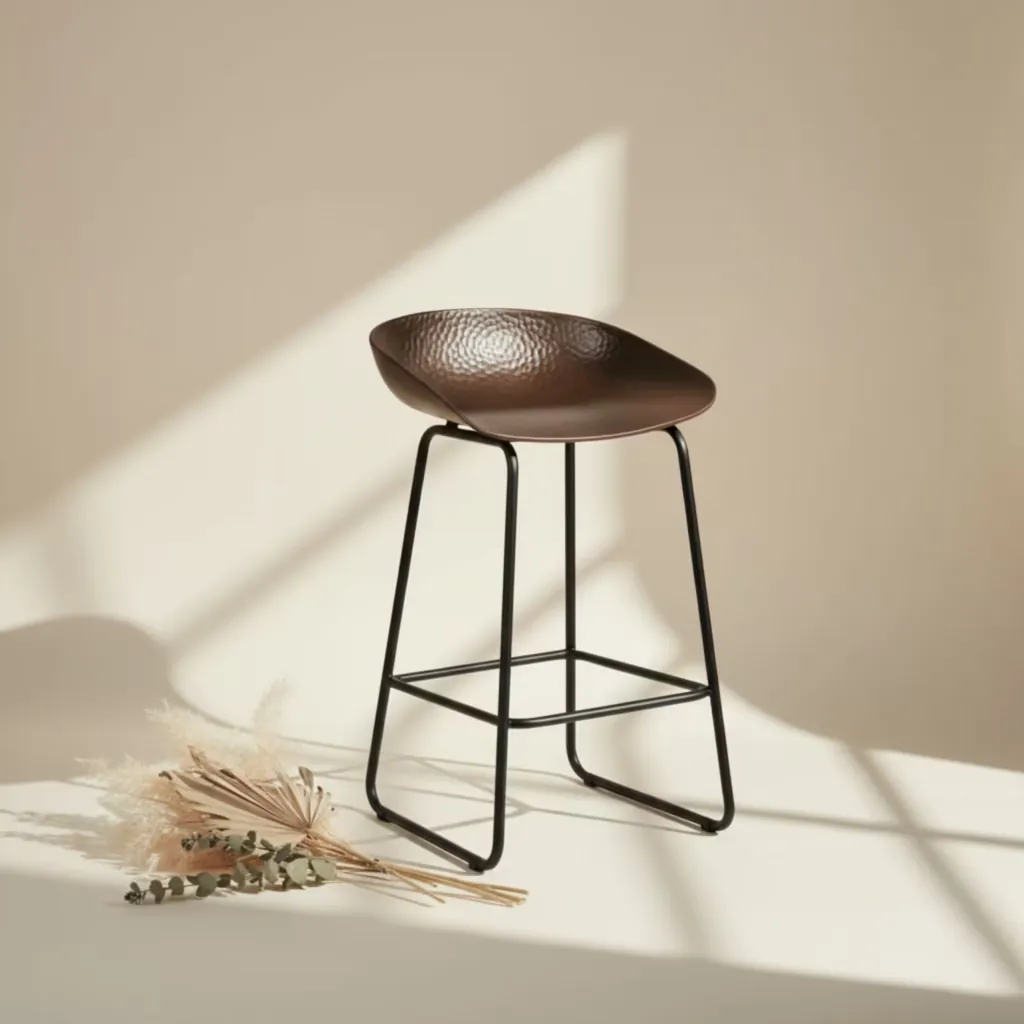
Kaffy coffee-ground high stool with a slim metal frame

Coffee-Ground Furniture vs Conventional Office Furniture on Eco Factors (Illustrative)

Furniture typeMaterial originWaste divertedImport trail
Kaffy coffee-ground pieceUpcycled spent grounds, MalaysiaYes — measured per orderNone — made locally
Imported plastic furnitureVirgin or unclear recycledNoneLong overseas chain
Particleboard furnitureWood composite with resinsNoneOften imported
Imported bamboo furnitureRenewable but importedNoneOverseas chain

Illustrative comparison compiled by Kaffy from fit-out brief guidance, 2026. Directional, for planning; not a lifecycle assessment.

Key takeaway

Against imported plastic, particleboard and bamboo, only the coffee-ground piece diverts real waste, avoids an import trail, and gives you a figure to report — the three things a green fit-out review actually checks.

How much waste does each Kaffy furniture piece divert?

Quick answer

Each Kaffy piece diverts a set amount of spent coffee grounds from waste — from around 150g for a desk organiser to 1,200g for a table-surface panel. The chart below shows the illustrative waste-diverted figure per piece, the number that turns a fit-out order into a reportable ESG line. The same grounds feed our coffee grounds collection programme.

The point of the figure is not the gram count on one organiser — it is what the count becomes at volume. A 200-desk office fit-out of monitor risers diverts roughly 70kg of spent grounds; a 40-panel surface order, around 48kg. That is a concrete number a sustainability team can put in a report, next to a photo of the actual furniture, instead of an unverifiable "eco-friendly" label. Every Kaffy order confirms its own diverted total on the delivery paperwork, so the reported figure matches the job, not a brochure estimate.

Illustrative Spent Coffee Grounds Diverted Per Kaffy Furniture Piece, Grams (2026)

Furniture pieceGrounds diverted per pieceGrams
Desk organiser
150
Monitor riser
350
Acoustic desk divider
650
Table-surface panel
1,200

Illustrative figures modeled on Kaffy product material content, 2026. Per-order totals are confirmed on the delivery paperwork for each job.

Key takeaway

Each piece diverts a documented amount of spent grounds — modest per item, meaningful across a fit-out — giving your ESG report a real, order-specific figure instead of a vague claim.

Is demand for sustainable office furniture rising in Malaysia?

Quick answer

Yes. As sustainability reporting becomes routine for Malaysian companies, more office fit-out briefs now carry an explicit ESG or sustainability requirement. The trend below shows the rising share of Kaffy furniture enquiries that name a sustainability criterion, tracking the wider shift toward documented, locally made pieces.

The driver is governance, not fashion. Bursa Malaysia's sustainability reporting expectations have pushed listed companies and their suppliers to evidence procurement decisions, and an office fit-out is a visible spend line to green and document. Once one department has to report on it, unverifiable furniture stops being acceptable — so the brief starts naming the criterion up front. The companies moving earliest are the ones that already publish a sustainability statement and want every line, including the office they sit in, to survive scrutiny.

Share of Office Furniture Enquiries Naming a Sustainability Criterion (Illustrative Trend)

YearEnquiries naming a sustainability criterionShare
2023
31%
2024
45%
2025
60%
2026 (YTD)
73%

Illustrative trend modeled on Kaffy enquiry-mix estimates, 2023–2026. Directional, not audited market share.

Key takeaway

Sustainability is becoming a default line in the furniture brief, not an afterthought — most 2026 enquiries now name a criterion, driven by reporting expectations rather than trend.

Reporting on your office fit-out this year?

We'll supply the waste-diverted figure and paperwork your ESG file needs.

Is Kaffy furniture halal-safe, customisable and CSR-ready?

Quick answer

Yes. Every Kaffy piece is halal-safe by policy — no alcohol-based finishes, no pork-derived materials — so one fit-out is fair across a mixed Malaysian workforce, covering the social pillar of ESG. Each is pressed from upcycled coffee grounds, laser-engraved in our own factory, and ships with documentation for the environmental and governance pillars. Kaffy is the B2B arm of PNH Malaysia Sdn Bhd.

Sustainable furniture is not only about carbon. The social and governance pillars decide whether a purchase is fair to every employee and whether the spend can be evidenced — and this is where coffee-ground pieces made in our own factory earn their sign-off:

That combination is why procurement and CSR teams approve large furniture orders without a long back-and-forth. The furniture answers all three ESG pillars in one purchase, it carries your brand, and the paperwork arrives with the delivery rather than being chased afterward.
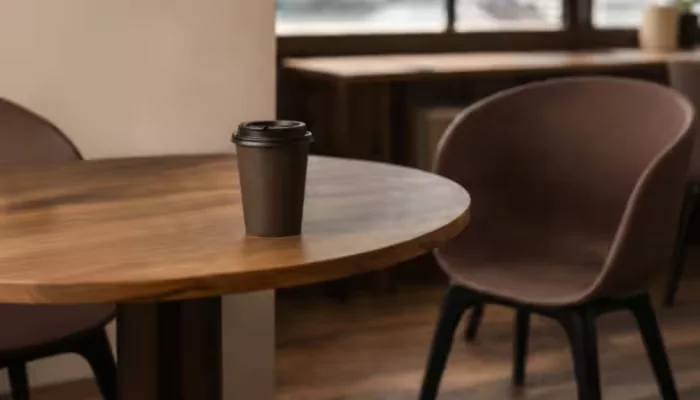
Kaffy cup on a meeting-room table beside a moulded chair
  • Halal-safe by policy (social). No alcohol-based finishes and no pork-derived materials, so one fit-out is inclusive across a Malay, Chinese and Indian workforce — no separate "safe" version needed.
  • Upcycled origin, documented (environmental). Each piece is pressed from locally collected spent grounds, giving a real waste-diverted figure rather than a vague eco claim.
  • Own-factory customisation. Laser engraving, colour matching and logo placement happen under one roof, with MOQs from as low as 50 units and lead times from around four weeks.
  • Clean paperwork (governance). Itemised invoice, delivery order and a per-order impact summary support reporting and audit without extra admin.
Key takeaway

Kaffy furniture covers all three pillars at once — halal-safe for the social, upcycled and documented for the environmental, and cleanly evidenced for the governance — while carrying your logo from our own factory.

How do you order sustainable office furniture from Kaffy?

Quick answer

Four steps: quote, mock-up, production, delivery. Share your piece list, deadline and reporting needs through the request-a-quote form, approve a digital mock-up, and most fit-out orders travel from brief to delivery in around four to eight weeks — with the impact summary included.

Here is the process from first enquiry to furniture in place:

  • Request a quote. Tell us the pieces, quantities, deadline and reporting needs, and send your logo file. We reply with a per-piece price, material options and the waste-diverted figure per piece.
  • Approve the mock-up. You receive a digital proof showing branding and finish; physical pre-production samples are available for larger fit-outs before you commit the full order.
  • Production and quality check. Pressing, engraving, finishing and QC all happen in Kaffy's own factory, with photo updates on request.
  • Delivery with paperwork. Furniture delivered to your office or split across sites, with the itemised invoice, delivery order and per-order impact summary included for your ESG file.
Key takeaway

One form starts everything — and because production and QC sit in one factory, the mock-up you approve is the furniture that arrives, with the reporting paperwork already in the delivery.

Conclusion: furniture your sustainability report can defend

Sustainable office furniture only works when the environmental claim survives a review — and that happens when the maker and the brander are the same local company. That is what Kaffy offers: coffee-ground pieces pressed and engraved in one Malaysian factory, halal-safe for a mixed workforce, and delivered with the waste-diverted figure and paperwork an audit expects. You get furniture people use every day, a documented impact line instead of a vague eco label, MOQs from as low as 50 units, and predictable lead times.

This page is one door into the wider Kaffy offer. When you are ready, explore the Kaffy corporate hub, see how the same material powers our ESG corporate gifts, or learn how our coffee grounds collection keeps the whole loop local.
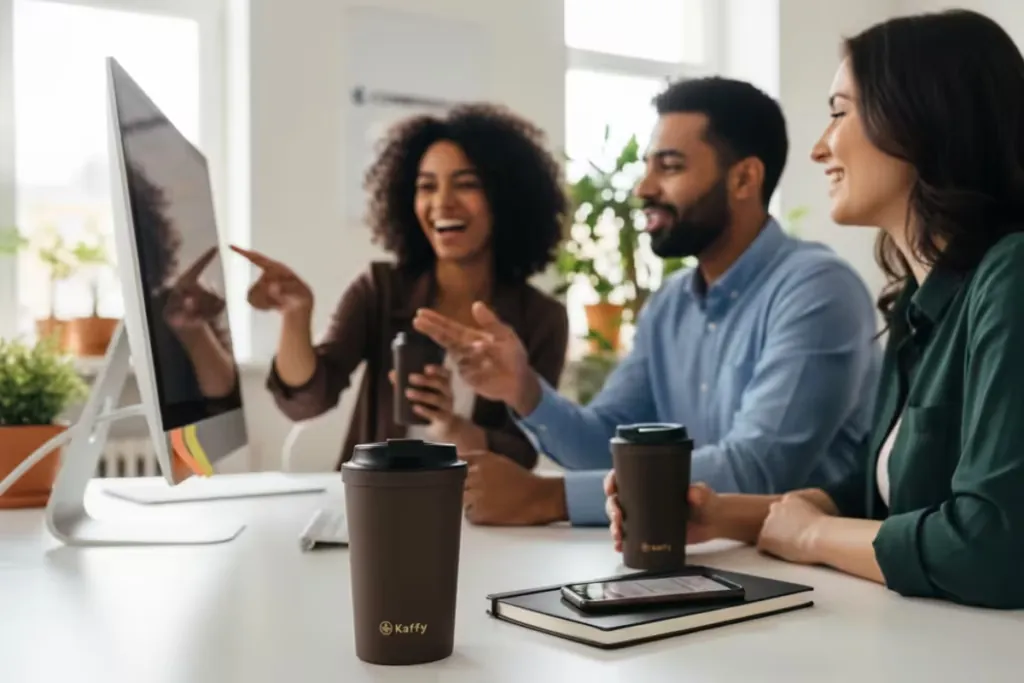
Colleagues in an office meeting with branded Kaffy cups on the desk

Logo Engraving with Precision – The Branding Behind Every Piece

Source video: Logo Engraving with Precision on YouTube

Frequently Asked Questions

What makes office furniture sustainable rather than just "eco"?
Can Kaffy provide a waste-diverted figure for our ESG report?
Is Kaffy office furniture halal-safe for a mixed workforce?
What is the minimum order and lead time?
Can the furniture be branded with our logo?

Ready to plan your sustainable office fit-out?

Send us your piece list, deadline and reporting needs — we'll come back with a per-piece price, a free digital mock-up and a per-order waste-diverted figure for your ESG file.